
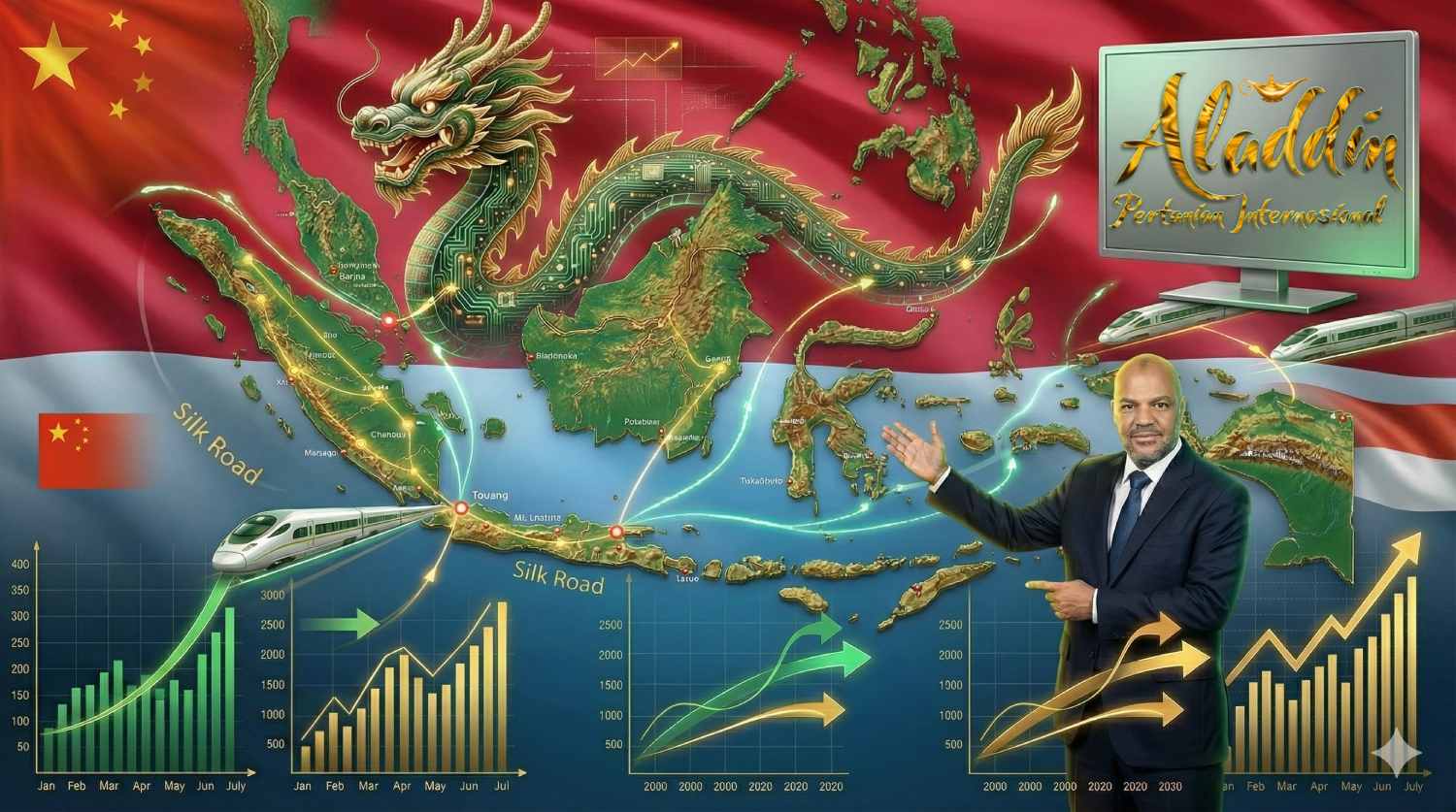
Beyond the
Dragon's Shadow
The Western Investor's Guide to Seizing "Quality Gaps" in Indonesia's AgriTech Sector
Executive Summary
Indonesia, the world's fourth-most populous nation, stands at a critical inflection point in its agricultural economy. While the first investment wave (2015-2023) prioritized "growth at any cost" and the dominance of consumer platforms, the recent implosion of the governance bubble—epitomized by the "eFishery" scandal and the collapse of "TaniFund"—has triggered a total market reset. This correction creates a strategic entry window for Western capital (US/European) which, while unable to compete with China in "price wars" or "commoditized hardware," possesses a sweeping competitive advantage in the "trust economy" and smart infrastructure.
China currently dominates the hardware layer, such as drones (DJI/XAG) and cloud infrastructure (Alibaba Cloud). However, this hegemony has left massive "quality gaps" in: (1) Cold chain logistics outside of Java, (2) Compliance and verification software (SaaS) required for export to the West (particularly with EUDR regulations), and (3) Disciplined agricultural financing that avoids the perils of indiscriminate lending.
This report proposes redirecting capital toward Real Assets and compliance technologies. The immediate opportunity in bridging the cold chain gap alone is estimated at $3-5 billion by 2030, with the potential to realize IRRs exceeding 15-20% for projects integrating renewable energy. The Western investor who enters now with rigorous due diligence mechanisms and technologies that enhance post-harvest efficiency will find a market starving for a "Trusted Partner" rather than a "Predatory Lender."
1. Introduction: The Current Landscape – Why Now?
Although agriculture constitutes 13% of Indonesia's GDP, the sector suffers from post-harvest losses reaching 40% in certain commodities. Chinese dominance focused on "Speed & Scale," leading to market saturation with fragile e-commerce platforms, while physical and logistical infrastructure remained underdeveloped. The eFishery scandal (fictitious revenue inflation of $600 million), and the TaniFund collapse (loan defaults >60%), proved the failure of the "Rapid Growth" model and the market's need for the "Sustainable Growth" model mastered by the institutional Western investor.
2. Opportunity Analysis: Where Does the Western Investor's "Alpha" Lie?
We have identified 5 investment opportunities representing "blind spots" for current Chinese investments, which align with Western standards for governance and return.
Opportunity 1: Cold Chain Infrastructure – "Hard Assets"
Description: Building and operating cold storage logistics warehouses in the Eastern regions (Sulawesi, Maluku) where fish are caught and spices are grown, yet storage facilities are virtually non-existent.
Why is it a gap? Chinese investments have focused on nickel smelters and heavy mining infrastructure. The fresh food sector suffers from acute shortages; Java holds 63% of capacity, leaving the rest of the archipelago exposed.
Market Size: Projected to reach $8.86 billion by 2030 with a CAGR of 9.5%.
Profit Model: Storage fees, value-added services (IQF Quick Freezing), and long-term leasing to export companies.
Success Indicators (KPIs): Capacity Utilization Rate (> 85%), Wastage reduction, Power Uptime.
Risks: Power outages in remote areas. Mitigation: Integrating hybrid cooling systems (solar + batteries) as part of CAPEX.
Opportunity 2: Compliance Software (EUDR Compliance SaaS) – "Regulatory Moat"
Description: Supply chain traceability software platforms (SaaS) ensuring Indonesian exports (cocoa, coffee, rubber, palm oil) comply with the European Union Deforestation Regulation (EUDR).
Why is it a gap? Chinese technology focuses on commercial enablement (e-commerce), not Western legal compliance. European and American companies do not trust data hosted on servers that do not adhere to GDPR/EUDR standards.
Market Size: Mandatory for all exporters to Europe by December 2025. The risk of losing the European market drives clients to pay generously for compliance.
Profit Model: Annual subscription (B2B SaaS) + fees per metric ton verified.
Competitive Advantage: Western firms can offer a "Seal of Trust" (Certification) that Chinese firms cannot provide with the same credibility in Brussels or Washington.
Opportunity 3: "Responsible" Microfinance (Responsible Agri-Fintech)
Description: Lending platforms based on Joint Liability Groups and alternative data, focusing on rural women, moving away from the risky P2P model.
Why is it a gap? Following the OJK (Financial Services Authority) crackdown and the closure of Investree and TaniFund, "hot money" has exited. The market needs lenders committed to ESG standards.
Profit Model: Net Interest Margin (NIM) and service fees.
Case Study: Amartha (raised $55 million from European DFIs) maintained a Non-Performing Loan (NPL) ratio below 2.6% compared to TaniFund's 60%, thanks to its "boots on the ground" model rather than a purely digital one.
Opportunity 4: Processing-as-a-Service
Description: Mobile or decentralized processing units for crops near the farm (e.g., corn drying, coffee hulling).
Why is it a gap? Most current investment goes into distribution (Logistics). Value added is lost due to primitive processing.
Advantage: Reducing weight before transport increases margins and reduces carbon footprint.
3. Case Studies (Lessons Learned)
A. The Fall: eFishery (Investor Warning)
The Model: Selling automated feeders + financing farmers.
What Happened? Management manipulated revenue (recorded $752 million while actual was $157 million) and hid losses via shell companies.
Lesson for the Western Investor: Do not rely on "Gross Merchandise Value" (GMV) metrics. Demand an inventory check of physical assets and ensure technology is actually being used, not just stockpiled in warehouses.
B. The Success: Koltiva (The Hybrid Western Model)
The Model: SaaS for traceability + "boots on the ground" (agronomists).
The Result: Attracted investments from Silverstrand and AC Ventures. Became the preferred partner for Multinational Corporations (MNCs) for EUDR compliance.
Lesson: Software alone is not enough; the human element for field verification is the true "defensive moat."
4. Competitive Comparison: West vs. China
| Competition Area | Chinese Advantage (China Inc.) | Proposed Western Advantage (Western Edge) |
|---|---|---|
| Hardware | Total dominance (DJI, XAG) at unbeatable prices. | Focus on high-value specialized sensors (Spectroscopy). |
| Digital Infrastructure | Alibaba/Tencent control Cloud and Payments. | Focus on Data Sovereignty, Security, and Compliance software. |
| Capital | Massive government infrastructure loans (BRI). | Equity investment with strict governance (ESG) and audit conditions. |
| Speed vs Quality | "Move fast and break things" (led to environmental disasters). | Sustainability and Compliance; long-term solutions aligning with international standards. |
Investor Conclusion: Do not try to build an "Amazon for Agriculture" in Indonesia; China has beaten you to it. Build the "Trusted OS" or the "Cold Chain Infrastructure" that the Chinese ecosystem lacks.
5. Investment Roadmap
- Phase 1: Entry & Validation (0 – 18 months): Investment in Series A/B rounds for SaaS companies (like Traceability) or small infrastructure projects (Pilot). (Ticket Size: $1-5M). Critical Action: Conduct a forensic audit to avoid "eFishery 2.0".
- Phase 2: Expansion & Integration (18 – 36 months): Financing Asset-Heavy expansion for successful cold storage projects outside Java. Integrating Fintech solutions with operations to increase "Stickiness". (Ticket Size: $10-20M).
- Phase 3: Exit or Dominance (36 – 60 months): Sale to a Japanese strategic investor (like Kiat Ananda) or a local conglomerate (like Astra/Indofood) seeking to improve their supply chains.
6. Risk and Mitigation Matrix
- Financial Fraud (Governance): (High Impact). Mitigation: Appoint an independent CFO; demand quarterly audits from Big 4 firms.
- Regulatory Changes: (High Probability). Mitigation: Focus on sectors with government backing (Food Security); partner with influential (non-political) local players.
- Infrastructure (Power): (Medium Impact). Mitigation: Invest in hybrid energy solutions (Solar-Hybrid) to reduce reliance on the PLN grid.
- Data Localization: (Medium Impact). Mitigation: Use certified local data centers and avoid total reliance on Chinese cloud for sensitive client data.
7. Conclusion and Call to Action (CTA)
The Indonesian market is not for gamblers, but for system builders. The opportunity is now ripe for smart Western capital to replace the "easy money" that has vanished with "smart money" that builds real assets.
3 Immediate Steps for the Investor:
- Target the "Missing Middle": Look for mid-stream logistics companies connecting farms to factories, and avoid crowded Last-mile delivery consumer apps.
- Audit for "Governance": Make Governance (ESG) a prerequisite for funding, not just an annual report. Companies that survive this scrutiny will be future market leaders.
- Local Partner: Look for second-tier family conglomerates seeking modernization who have not yet exclusively tied themselves to Chinese capital.
Appendix: Due Diligence Checklist
- [ ] Revenue Verification: Did we match sales data with actual bank cash flows (not just invoices)? (eFishery lesson).
- [ ] Land Legality: Does the project possess clear Right of Cultivation (HGU) and is it free from local community disputes?
- [ ] Debt Structure: Is the company burdened with short-term P2P loans with usurious interest rates?
- [ ] Environmental Compliance: Does the company hold genuine (ISPO/RSPO) certificates, not merely cosmetic ones?
- [ ] Technology Dependency: Does the company rely >80% on a single Chinese hardware supplier? (Supply Risk).
- [ ] Fund Segregation: Are lender funds (in Fintech cases) strictly separated from operational funds in Escrow accounts?
- [ ] Energy Plan: Is there an alternative for grid power outages lasting > 4 hours? (For cold chains).
- [ ] Data Localization: Are data servers compliant with the Indonesian PDP Law (2022)?
- [ ] Political Ties: Does the business model rely on temporary "government support" that might vanish with a minister change?
- [ ] Asset Quality: Has a surprise physical inventory check been conducted on biological assets (fish stock/crops)?
This report was prepared based on market data analysis and regulatory reports up to Q1 2025.
Investment Dashboard
Digital interactive version for live data visualization and analysis
Interactive Panel
Thesis 2025
Opportunity Size
$3-5 Billion
Expected Return
> 20%
Entry Point
Q4 2025
Current Landscape
Indonesia stands at an inflection point. The implosion of the governance bubble (eFishery, TaniFund) has reset the market, creating a strategic entry window for Western capital. While China dominates "Hardware," it has left massive gaps in "Quality" and "Compliance."
Correction Triggers
- eFishery Scandal: $600M fictitious revenue inflation
- TaniFund Collapse: Loan defaults > 60%
- Post-harvest losses: Reaching 40%
Investment Opportunities (The Alpha)
1. Cold Chain
Building cold storage warehouses in Eastern regions (Sulawesi, Maluku) to bridge the logistics deficit.
2. Compliance Software (SaaS)
Traceability platforms ensuring export compliance with EU regulations (EUDR).
3. Responsible Financing
Micro-lending based on shared responsibility (Group Lending).
4. Processing-as-a-Service
Mobile processing units (drying, hulling) near the farm to reduce weight.
Case Studies
eFishery (The Fall)
Management manipulated revenue (recorded $752 million while actual was $157 million) and hid losses via shell companies.
Koltiva (The Hybrid Model)
Attracted global investments by integrating SaaS traceability with "boots on the ground" verification teams.
Market Comparison
| Area | China (China Inc.) | West (Aladdin Strategy) |
|---|---|---|
| Hardware | Total dominance (Low Cost) e.g., DJI | High-value sensors (Spectroscopy) |
| Digital Infrastructure | Alibaba Cloud / Fast Payments | Sovereignty & Compliance (GDPR/EUDR) |
| Capital | Massive government infrastructure loans (BRI) | Equity investment with strict governance |
| Speed vs Quality | "Move fast and break things" | Sustainability & long-term growth (ESG) |
Roadmap
Phase 1: Entry & Validation
0 - 18 MonthsInvestment in Series A/B rounds for SaaS companies or small infrastructure projects (Pilot).
Critical Action: Forensic audit to avoid "eFishery 2.0".
Phase 2: Expansion & Integration
18 - 36 MonthsFinancing Asset-Heavy expansion outside Java. Integrating Fintech with operations to increase stickiness.
Phase 3: Exit or Dominance
36 - 60 MonthsSale to a Japanese strategic investor (Kiat Ananda) or a local conglomerate (Astra/Indofood).
Risk & Mitigation Matrix
Financial Fraud
High ImpactMitigation: Appoint independent CFO; demand quarterly audits from Big 4 firms.
Regulatory Changes
High ProbabilityMitigation: Focus on government-backed sectors (Food Security).
Infrastructure Failure
Medium ImpactMitigation: Invest in hybrid energy solutions (Solar-Hybrid).
Due Diligence Checklist
All 10 points must be verified before investment